Wednesday, March 14, 2012

CAD PROJECT

Number 1

Number 3

Number 5

Number 6

Number 9

Number 10

Changes to Learnring

The video was great. I am not learning Calculus at the moment but I plan to next year. I watched the introduction video which was very helpful. He explained everything well and allowed me to understand the basic concept. I wish for more examples though because the more the better.

I believe we should "Flip the Classroom". Are learning is based around people that didn't have our technology and our intellect. We need to change it to our times like, computers, video games, TV, etc have to make life easier for everyone.

Video http://www.youtube.com/watch?v=riXcZT2ICjA&feature=player_embedded#!

Khan Academy

http://www.youtube.com/watch?v=riXcZT2ICjA&feature=player_embedded#!

Learning some mathematics. :)

Wednesday, March 7, 2012

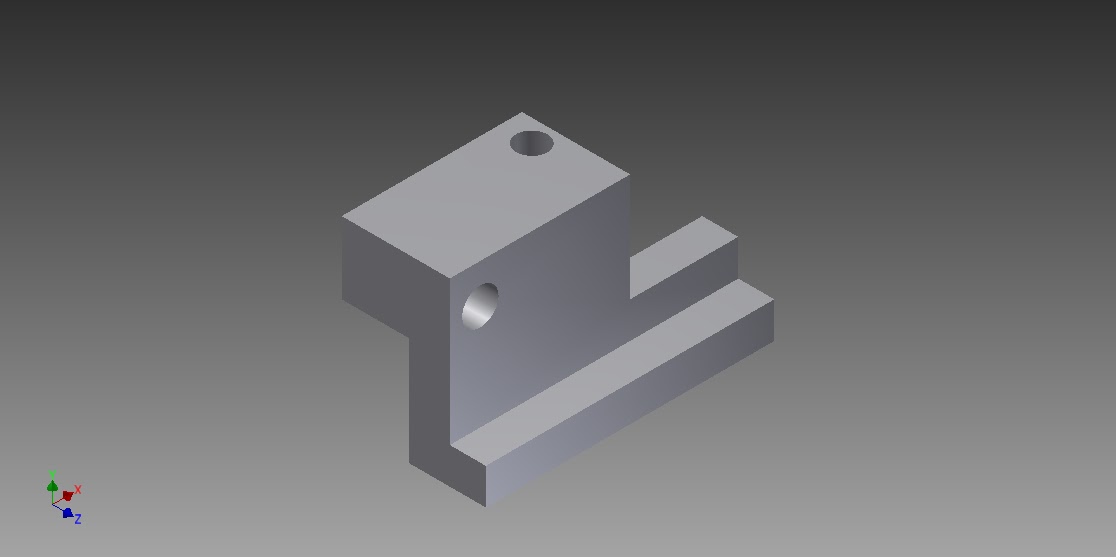
CAD SHENNIGANS

I believe this is all of them. I went through the documents there is a chance I may have missed some if I have please tell me. I will get them up ASAP.


Circular Pattern


Hole


Tapered Extrusion


Chamfer


Mirror


Loft


Midplane Extrusion


Paper Clip--- Sweep


Pattern Along the Walkway


Rectangular Pattern


Revolve


Rib


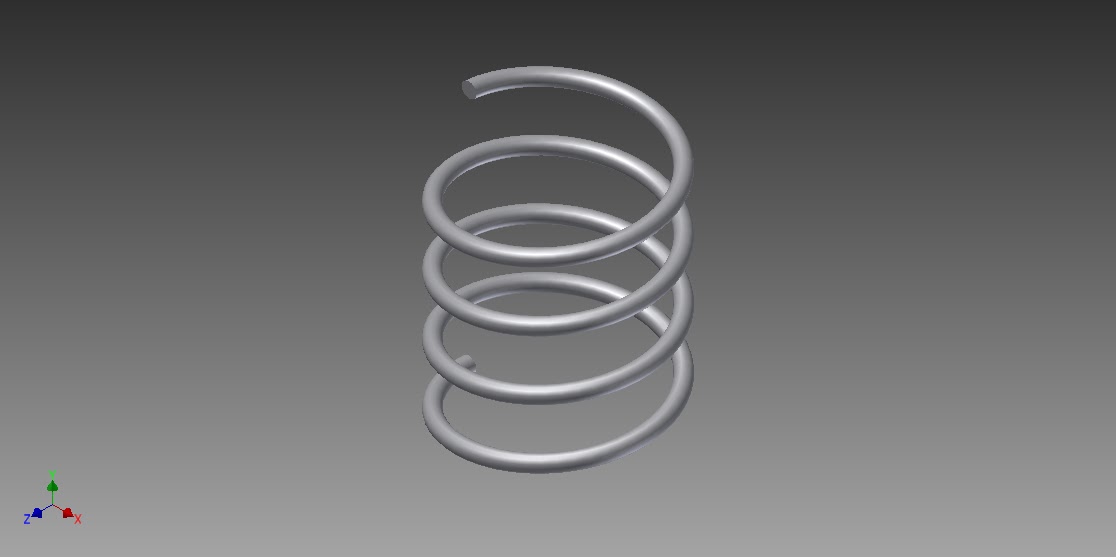
Coil


Thread


Wrist Band


Conclusion
1.    What 3-D CAD functions could be used to create a wire coat hanger?
 You would propably want to use the fillet and chamfer options to create that bend for the coat hanger. Also you the drill hole to make the middle part.

2.    What feature would be used to create a 3-D representation of a spindle that was created on a wood lathe?
 The thread function would be best to create a spindle.

3.    How does a 3-D CAD solid model program keep track of the changes that are made to an object?
 On the side there is browser that stores anything you have done to the object.


4.    If a mistake is made, how does the user make a correction without using the undo function?
You can use CTRL + Z or you can click the back arrow near the top of the page.

Monday, March 5, 2012

Provide a breif description of the activity. Who did you work with? What did you build? What challenges did you overcome to succesfully craft your aircraft?

The activity had groups build their own airplanes out of a kit. I worked with Micheala, and we built the airplane that was instructed. The main challenge of the entire project was keeping the plane together. Putting the pieces together and then keeping them in place posed quite the challenge.

2) Post a photo of your glider under construction.


3) Post a photo of your finished design.

4) Describe how you tested your aircraft and tuned its flight characteristics.


We tested the plane by flying it a few times outside We changed the rubber band tightness and also made the wings a little stronger to help stabilize it while flying.

5) Describe how well your aircraft flew in our competition. Did you win any events (furthest distance, longest time aloft)? Were you competitive in our best decorated flier competition?
On the first try our plane with the farthest by far. Making it half-way across the court. We won the furthest distance. We were competitive defiantly in the best decorated... It's hot pink.

6) Pick three steps from the PLTW 12 step design process and describe how your team worked through these during the course of this experience.

1. Define the Problem- We had to build a plane that competed to be best in class with the rest.
2. Make a Prototype- We Built the plane at first with a not so powerful propeller and bigger wings.
3. Test- We tested the plane and discovered it didn't go straight and didn't fly for very long which was problematic. 
4. Refine- We changed the large wings to tinier wings and made the propeller stronger by tightening the rubber band.

Monday, February 27, 2012

1) What was the “Moneyball”approach that Billy Beane and Peter Brandt applied to the Oakland Athletics 2002 season? Was it an “art” or a “science”? What single statistic did they boil their value consideration down to? (In class research/discussion)

      They wanted to find the best value for players. By replacing their best players using OBP. They boiled the entire statistic down to OBP, because it takes runs to wins, and to win you need bass runners. The approach is more scientific because it uses statistics.

2) What is the equation used to calculate OBP? (In class research/discussion)formula:
OBP = \frac{H+BB+HBP}{AB+BB+HBP+SF}

3) What is design? (In class research/discussion)

    Design is coming up with the best possible solution and forming it to the needs of what you are performing.

4) Describe 3 situations where movie characters (intentionally or not) applied a step from the PLTW 12 Step Design Process. Explain both the (a) situation as well as (b) how the step is relevant:1 - When Billy Beane traded away Jeramey Giambi. He did this because the process was not working and he believed it would benefit the team.

2 - When Billy Beane hired Peter Brandt to help form the team. This is relevant because he helped put everything together and tell Billy who was needed.

3 - When putting the team together he got rid of Pena so that his design would help better the team. He had a plan to help the team win. So he got rid of something the was preventing that.


5) What is “Leadership”? (In class research/discussion)1 - Direction- Giving clear vision of the groups goals.
2 - Alignment- Keeping everyone in line, and putting the team together.
3 - Committment - Committing yourself to the plan and sticking to it, so no one doubts you.

6) Describe 3 circumstances from the story where a character exercised effective leadership:
1 - After the A's lost a game. And Jermey Giambi was partying Billy got rid of him because he was bringing the team down.

2 - Bought Peter Brandt to help the team get better.

3 - Billy had Peter Brandt fire Pena because he need to learn to grow-up and help the team.


7) According to the movie, what was the A’s record at the start of their winning streak? 68: 51

8) What does this ratio simplify to (roughly)? .000013 : 1

9) How long was the A’s record setting winning streak? 20  games won.

10) Given the A’s win/loss ratio at the start of the streak (listed two questions above), what are the odds of winning 20 games in a row? Run the numbers. (In class research/discussion)


.000013 chance of winning 20 games in a row.

11) Based on your calculation, do you think the A’s got lucky or was there something to the Moneyball approach?Luck always has something to do with winning that many games in a row. Although the statics did help and having the right team can always help too.

12) Did Billy Beane strictly apply the “science” of Moneyball to his management approach? Was there an “art” to his efforts as well? Describe a circumstance where he broke from the Moneyball approach to make a positive change for the team.

I feel it was mainly science. Although he did depend on it he went against it when he traded away Jermey Griambi. He had his own approach modified to what was going to work.

Wednesday, December 14, 2011

Puzzle Cube

I did this twice. My computer broke so I had to do it again. I did it though. I am so proud. :)


Ya the quality of the video is very poor, I couldn't change it for some reason though.